How Artificial Intelligence is Reshaping the Traditional Middle-Class Career Ladder and Entry-Level Work
Quick Brief
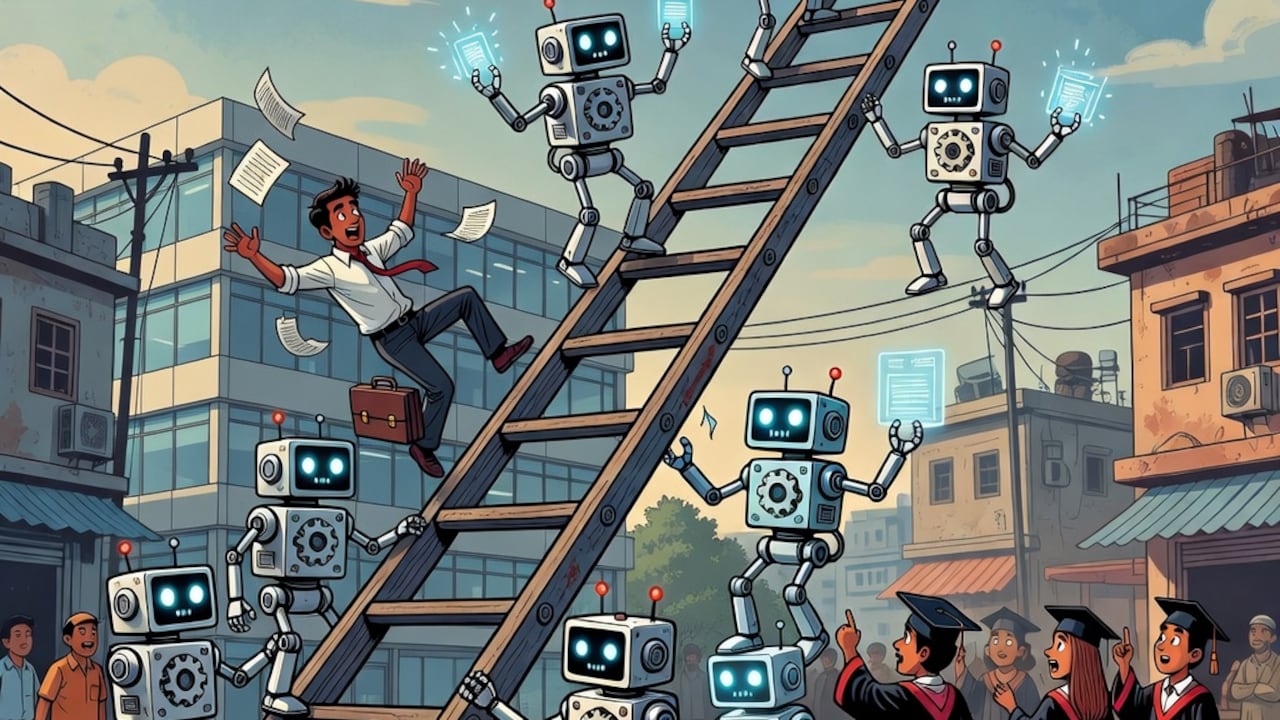
The traditional career ladder is undergoing a significant transformation as artificial intelligence begins to handle entry-level job functions. Historically, new professionals started with routine tasks, learned from seasoned colleagues, and advanced over time. Now, the automation of these foundational duties threatens to disrupt traditional career progression.
What Happened?
The conventional career progression model, where fresh employees join an organization to execute routine duties and gradually gain seniority under senior mentorship, is being disrupted by artificial intelligence taking over entry-level roles.
Why It Matters
This shift challenges the traditional pathway for middle-class career development, raising fundamental questions about how new workers will gain experience, learn foundational skills, and advance to higher responsibilities if entry-level tasks are automated.
Key Facts
- The traditional career model relied on freshers starting with routine work.
- New employees historically learned from seniors while handling foundational tasks.
- Artificial intelligence is now taking over entry-level work responsibilities.
- The shift alters the standard progression pathway for middle-class careers.
Compiled from 1 outlet
Related Stories

Japanese Yen Surges Over 1.7% Against the US Dollar
The Japanese yen experienced a significant surge, rising more than 1.7% against the US dollar. This upward movement brought the currency to a one-month high of 155.85, driven by expectations that the Bank of Japan will increase interest rates. The strong performance follows a 0.9% gain from the previous day amidst general unease in global financial markets.

India-U.S. Trade Agreement Awaits U.S. Preferential Rate Offer, Says Minister Goyal
Indian Commerce Minister Piyush Goyal has stated that the finalization of a trade pact between India and the United States hinges on the U.S. offering a preferential rate. Goyal noted that India's nine free trade agreements span economies representing roughly $60 trillion of GDP. These agreements collectively offer preferential market access to nearly two-thirds of global trade.

Prime Minister Urges Automobile Sector to Drive Viksit Bharat 2047 Vision
The Prime Minister has challenged the nation's automobile industry to establish a courageous direction toward the Viksit Bharat 2047 objective. Highlighting ongoing improvements in roadways and infrastructure, the administration emphasized how these developments are boosting logistics while generating fresh prospects for vehicle manufacturers.
Gulf Insecurity Strengthens United States Energy Dominance
The ongoing regional instability in the Gulf, characterized by a persistent no-war and no-peace dynamic involving Iran, continues to serve US economic and strategic interests. This precarious geopolitical environment directly strengthens the dominance of the United States energy sector. Additionally, the current status quo provides notable advantages to American allies, particularly Israel.