Readers Debate Solutions for Massive Carbon Footprint of Future Datacentres

Quick Brief
Letters published in response to reports about high-emission datacentres propose various ways to curb their environmental impact. Suggestions include mandating that these facilities generate their own renewable energy and reducing overall digital communication. Critics argue that corporations are shifting their environmental burdens onto society.
What Happened?
In response to findings that upcoming datacentres could demand more electricity than the entire United Kingdom and produce higher carbon emissions than ExxonMobil, readers have proposed measures to address the industry's growing environmental footprint. Proposals include requiring individual datacentre installations to build their own renewable energy infrastructure—such as solar panels, wind generation, and battery storage—on-site, alongside emissions scrubbers to achieve zero CO2 output. Other perspectives advocate for cutting back on digital communication entirely.
Why It Matters
The rapid expansion of datacentres presents a major challenge for climate goals and national power grids as their energy demands soar. Debating how to regulate these facilities addresses broader concerns about corporate accountability and the environmental cost of digital infrastructure.
Key Facts
- Future datacentres are projected to demand more electricity than the entire United Kingdom.
- Analysis previously indicated two planned datacentres could have higher UK carbon emissions than ExxonMobil.
- One proposed solution requires datacentres to generate all their own electricity using on-site solar, wind, and battery storage.
- Letters also suggested utilizing vast parking and roof areas for renewable energy and installing emissions scrubbers.
- Alternative viewpoints called for a reduction in digital communication to lower overall energy demand.
Compiled from 1 outlet
Related Stories

New Study Reveals Current El Niño is Strongest in a Millennium
A recent scientific study has determined that the current El Niño climate phenomenon has reached unprecedented levels. According to the research, it is now stronger than at any other point over the last millennium.

Kharif Harvest Faces Threat in Chittoor Due to Deficient Monsoon
Agricultural prospects for the Kharif season in Chittoor have turned bleak as the region experiences an erratic southwest monsoon. Extended dry spells persisting since March have placed rain-fed farmlands at risk of a poor harvest with only a couple of months remaining in the season.
Potential Tropical Cyclone Edouard Threatens Gulf Coast With Heavy Rain
A weather disturbance currently moving through the Gulf of Mexico is bringing heavy rain and thunderstorm threats to parts of Texas and Louisiana. The National Hurricane Center is actively issuing advisories on the system, which faces high odds of further tropical development.
Liberal Democrats Urge Prime Minister Andy Burnham to Call Cross-Party Climate Talks
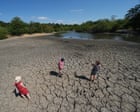
The Liberal Democrats have called on Prime Minister Andy Burnham to host a cross-party meeting addressing escalating extreme weather conditions and the upcoming 'super El Niño'. The party argues that despite a recent Cobra emergency meeting on the drought, the government has failed to adequately address broader threats like food shortages and inflation following five successive summer heatwaves.