Hideki Shirakawa, Nobel Laureate in Chemistry and Pioneer of Conductive Plastics, Dies at 90

Quick Brief
Japanese scientist and Nobel Chemistry Prize winner Hideki Shirakawa has passed away at the age of 90. He was recognized for his groundbreaking work demonstrating that plastic could conduct electricity like metal. His research laid foundational pathways for modern electronic applications.
What Happened?
Hideki Shirakawa passed away at age 90. Alongside American scientists Alan Heeger and Alan MacDiarmid, Shirakawa discovered that plastic materials could be modified to conduct electricity, bridging the gap between polymers and metals.
Why It Matters
Shirakawa's pioneering research fundamentally transformed material science and electronics. By proving that plastics could carry electrical currents, his discoveries enabled the development of various everyday electronic applications and technologies.
Key Facts
- Hideki Shirakawa passed away at the age of 90.
- He shared the Nobel Prize in Chemistry with American scientists Alan Heeger and Alan MacDiarmid.
- Their research demonstrated that plastic can conduct electricity similar to metal.
- The discovery has been instrumental in the development of modern electronic applications.
Compiled from 1 outlet
Related Stories

Australian Researcher Wins Science Prize for Studying Memory in Domestic Violence Survivors
University of Sydney forensic psychologist Helen Paterson has been honored with a prestigious Eureka prize in Australia. Her research examines how memory functions differently for witnesses of repeated trauma, such as domestic and family violence, compared to single-event witnesses. The findings aim to help police and courts better understand survivor recollections.
September 2026 Night Sky Features Harvest Moon and Prime Planetary Views
Skywatchers can look forward to a busy astronomical month in September 2026, highlighted by the rise of the Harvest Moon. The month's celestial calendar also includes bright views of Venus, the fall equinox, and observations of the Andromeda Galaxy.
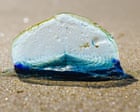
Stranded Marine Hydrozoan Velella Velella Washes Ashore on Devon Beach
A traveller walking on an estuarine beach in Appledore, Devon, recently encountered a vibrant blue marine creature resembling a piece of plastic. Upon closer inspection, the object was identified as a by-the-wind sailor, or Velella velella. These marine hydrozoans have reportedly washed up in significant numbers throughout the summer.
Astronomers Discover Mysterious 10-Sided Wave Pattern in Saturn's Atmosphere
Astronomers have detected a massive, mysterious 10-sided wave pattern swirling in the clouds over Saturn's south pole. The unusual decagonal structure marks a unique atmospheric feature discovered on the gas giant planet.