New Studies Reveal Mercury Is Shrinking Faster and More Than Previously Expected
Quick Brief
Recent scientific studies indicate that Mercury, the closest planet to our sun, is experiencing a contraction process. Researchers have found that the planet is shrinking at a faster pace and to a greater extent than previously understood.
What Happened?
New scientific findings and studies have emerged indicating that Mercury is shrinking. Researchers utilizing hidden clues are investigating whether the planet's contraction is even more substantial than previously thought, revealing a faster rate of reduction in size.
Why It Matters
Understanding how Mercury contracts provides critical insights into the geological evolution and thermal history of rocky planets in our solar system, including Earth.
Key Facts
- Mercury is the closest planet to the sun.
- New studies indicate the planet is shrinking faster than previously thought.
- Researchers are analyzing hidden clues to determine if Mercury is smaller than expected.
- The findings suggest Mercury may have contracted significantly more than earlier estimates.
Compiled from 1 outlet
Related Stories
Astrophysicists Calculate Timelines for the Destruction of Earth and the End of the Universe
Astrophysicists and scientists have published calculations detailing the projected timeline for the eventual destruction of Earth. Reports also outline various theories on how the universe itself could conclude, including the possibility of a cosmic tear.
Fossilized 10,000-Year-Old Mastodon Tooth Discovered in California
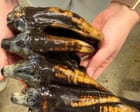
A well-preserved fossilized tooth from an ancient mastodon has been discovered in Northern California. The artifact, estimated to be 10,000 years old, was found by a geomorphologist who initially mistook it for an unusual rock. The remarkable molar offers a glimpse into the large mammals that once roamed North America.
First-Ever Adult Tyrannosaurus Rex Trackway Discovered in North Dakota
Paleontologists have uncovered the first-ever trackway attributed to an adult Tyrannosaurus rex in the North Dakota badlands. The 66.5-million-year-old sequence features four giant, three-toed prints found near Marmarth. Analysis of the impressions shows the apex predator moved at a casual walking speed.
NASA Launches Artifact InSPECtor Citizen Science Project
NASA has introduced a new citizen science initiative called Artifact InSPECtor. The project invites members of the public to help scientists refine data gathered by distant space telescopes. Participants will assist missions such as Euclid and the upcoming Nancy Grace Roman Space Telescope in ensuring the accuracy of their observations.