NASA Begins Commissioning Phase for Roman Space Telescope
Quick Brief
The Nancy Grace Roman Space Telescope is currently traveling toward the Sun-Earth Lagrange Point 2. During this three-month journey, the spacecraft is undergoing its critical commissioning phase. Scientists and engineers are turning on, adjusting, and calibrating its systems to prepare for future science operations.
What Happened?
The Roman Space Telescope has embarked on a three-month journey from Earth to Sun-Earth Lagrange Point 2 (L2). Concurrently, the mission has entered its commissioning phase, which involves powering on, tuning, and calibrating the spacecraft's instruments and systems.
Why It Matters
The commissioning phase is a vital period for mission teams to ensure that all onboard systems function properly and that the telescope performs as expected before it officially begins gathering scientific data.
Key Facts
- The Roman Space Telescope is traveling to Sun-Earth Lagrange Point 2 (L2).
- The journey and commissioning process take approximately three months.
- Commissioning involves turning on, adjusting, and calibrating spacecraft systems.
- Engineers and scientists use this phase to verify proper telescope performance prior to science operations.
Compiled from 1 outlet
Related Stories
European Scientists Recreate Microscopic 'Big Bang' Using Oxygen Collisions
European researchers at CERN have successfully simulated the conditions of the early universe by colliding oxygen nuclei. This experiment produced a microscopic droplet of quark-gluon matter, marking the smallest collision system yet to reveal this high-temperature state. The findings provide insights into how matter behaved fractions of a second after the Big Bang.

ANEC Serves Legal Notice Regarding Elephant Deaths on Walayar Rail Corridor
The Animal Nature Environment Collective (ANEC) has issued a formal legal notice concerning ongoing elephant fatalities along the Walayar railway corridor. The notice calls for urgent interventions to halt the deaths and demands the complete activation of an artificial intelligence-powered detection and early-warning system.

Readers Debate Whether Filling Car Tyres With CO2 Could Reduce Atmospheric Carbon
A reader question submitted to The Guardian's long-running series asks whether filling all global vehicle tyres with carbon dioxide would lock up enough carbon to noticeably reduce greenhouse gases in the atmosphere. The inquiry also raises potential challenges, such as the environmental cost of capturing the carbon required for the process.
South African Researchers Clean Polluted River Water Using Natural Materials
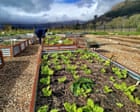
Researchers at the University of Cape Town have developed a chemical-free system using stones, heat-treated wood, and sand to purify polluted water from South Africa's Stiebeuel River. The low-cost, renewable energy-powered system treats 36,000 liters of wastewater daily, making it safe for irrigating local vegetable plots. Scientists believe this sustainable method offers a viable model for maintaining food security in a rapidly warming climate.