NASA Successfully Launches Nancy Grace Roman Space Telescope
Quick Brief
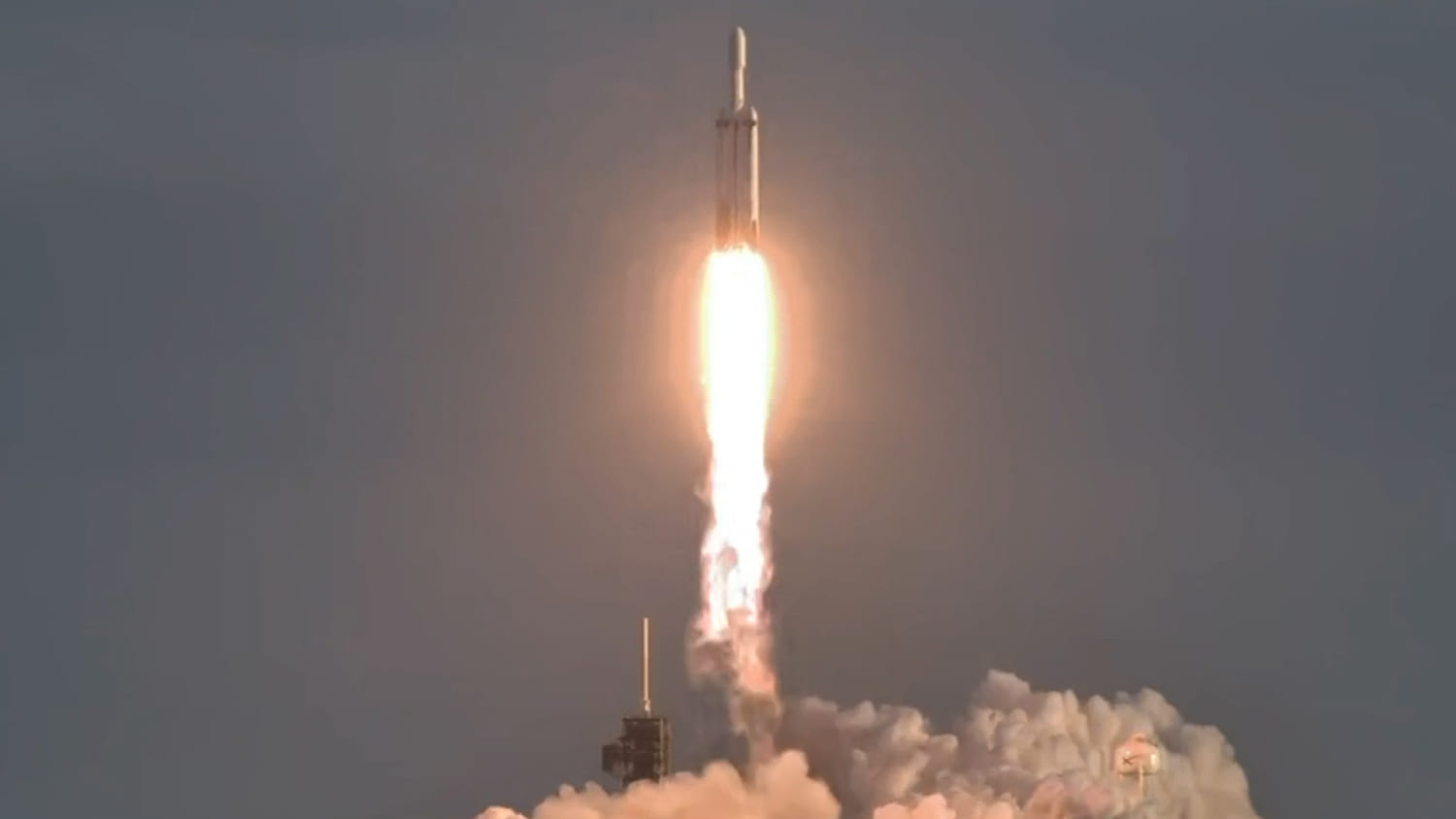
NASA has officially launched its next-generation space telescope, the Nancy Grace Roman Space Telescope. The advanced observatory is designed to survey hundreds of millions of stars and billions of galaxies. This deployment marks a major milestone for the agency's space observation capabilities.
What Happened?
NASA launched the Nancy Grace Roman Space Telescope into space to begin its mission of deep-space observation and sky surveying.
Why It Matters
The telescope represents a major advancement in next-generation space exploration technology, with the capacity to observe vast numbers of stars and galaxies to expand our understanding of the universe.
Key Facts
- NASA launched the Nancy Grace Roman Space Telescope.
- The observatory is classified as a next-generation space telescope.
- It is expected to survey hundreds of millions of stars.
- The mission will also observe billions of galaxies.
Compiled from 1 outlet
Related Stories
NASA Successfully Launches Nancy Grace Roman Space Telescope Aboard SpaceX Falcon Heavy
NASA has successfully launched the Nancy Grace Roman Space Telescope from Kennedy Space Center in Florida. The observatory departed aboard a SpaceX Falcon Heavy rocket at 7:26 a.m. EDT on Sunday. It is now embarked on a three-month, million-mile journey toward its operational orbit.

Advocates Allege EPA Manipulated Safety Data Regarding Toxic Flame Retardant TBBPA
Public health advocates allege that the EPA is manipulating safety data concerning TBBPA, a widely used and highly toxic flame retardant. Independent research reveals that the chemical, found in domestic dust and consumer products, poses potential dangers to the American public, particularly children.
NASA Launches Nancy Grace Roman Space Telescope to Study Dark Energy and Exoplanets
NASA has successfully launched the Nancy Grace Roman Space Telescope aboard a SpaceX Falcon Heavy rocket. The observatory is traveling approximately one million miles from Earth to Lagrange point 2. Its primary objectives include investigating dark energy, dark matter, and planets outside our solar system.
Earth Would Take Nearly 14 Years to Hear the Sun's Final Roar If Sound Could Travel Through Space
If the Sun were to suddenly vanish, darkness would reach Earth roughly eight minutes later. However, due to the immense speed difference between light and sound, any acoustic wave traveling through space at the speed of air would take nearly 14 years to reach us. This staggering delay highlights the fact that light travels about 874,000 times faster than sound.