NASA Prepares to Launch Advanced Space Telescope to Survey Millions of Stars
Quick Brief
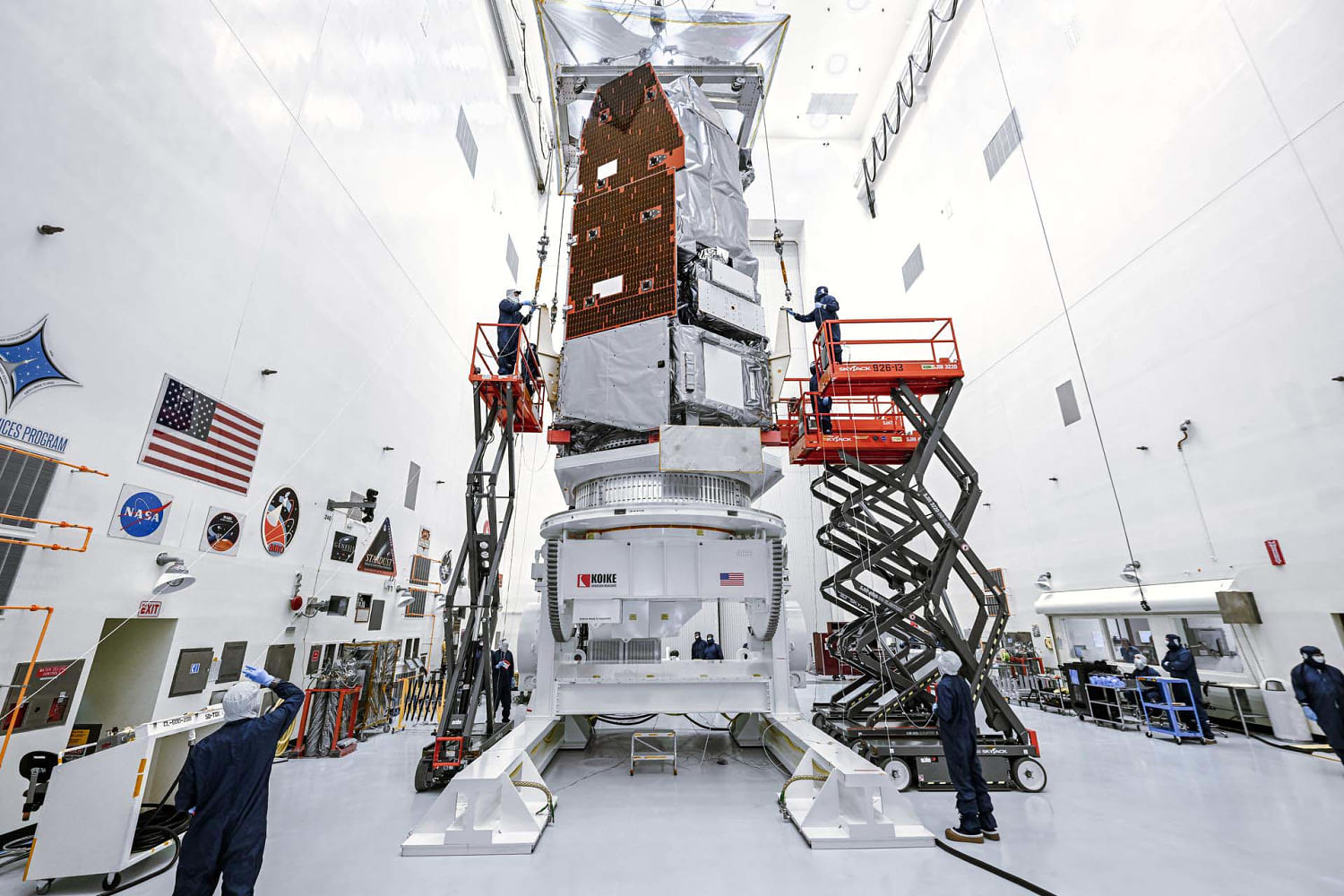
NASA is preparing to launch a next-generation space telescope on Sunday. The advanced observatory is designed to survey hundreds of millions of stars and billions of galaxies across the universe. This mission marks a major step forward in space exploration and astronomical observation.
What Happened?
NASA is scheduled to launch its newly developed space telescope on Sunday. The mission aims to deploy the observatory into space to conduct extensive surveys of the cosmos.
Why It Matters
The deployment of this next-generation observatory will significantly expand our capability to observe and catalogue vast portions of the universe, including hundreds of millions of stars and billions of galaxies.
Key Facts
- NASA is set to launch the telescope on Sunday.
- The observatory is classified as a next-generation space telescope.
- The mission's survey targets include hundreds of millions of stars.
- The telescope will also observe billions of galaxies.
Compiled from 1 outlet
Related Stories
Turkey Set to Become 71st Signatory of the Artemis Accords at NASA Headquarters
Turkey is scheduled to sign the Artemis Accords at NASA Headquarters in Washington, joining as the 71st international signatory. NASA Administrator Jared Isaacman will host Turkish Minister of Industry and Technology Mehmet Fatih Kacır alongside U.S. State Department officials for the ceremony.
China Postpones Chang’e-7 Moon Mission to 2027
China has delayed its upcoming Chang’e-7 lunar mission by a year, pushing the launch from its original schedule to 2027. The decision was driven by the necessity to ensure absolute success for the unprecedented water-hunting expedition. The postponement impacts China's timeline within the ongoing international space race.

Scientists investigate high-altitude avalanche as trigger for devastating Bhotekoshi flood in Nepal
Scientists are actively investigating the origins of a catastrophic flood along the Bhotekoshi in Nepal. Researchers are examining whether a high-altitude rock-and-ice avalanche served as the primary trigger for the disaster. While experts have not directly linked this specific incident to climate change, they highlight that rising regional temperatures are warming the Himalayas and accelerating glacial melt.

Karnataka Medical College Hospital Receives ₹5.5 Crore ICMR Grant for Rare Skin Disorder Research
A medical college hospital in Karnataka has been awarded a significant grant of over ₹5.5 crore by the Indian Council of Medical Research (ICMR). Spanning four years, the funding will drive the ADAPT-EB project focused on Epidermolysis Bullosa. The initiative aims to develop accessible diagnostics and affordable precision therapies tailored to the Indian population.