Nepal Flood Warning Failures Spark Debate Over Satellite Integration
Quick Brief
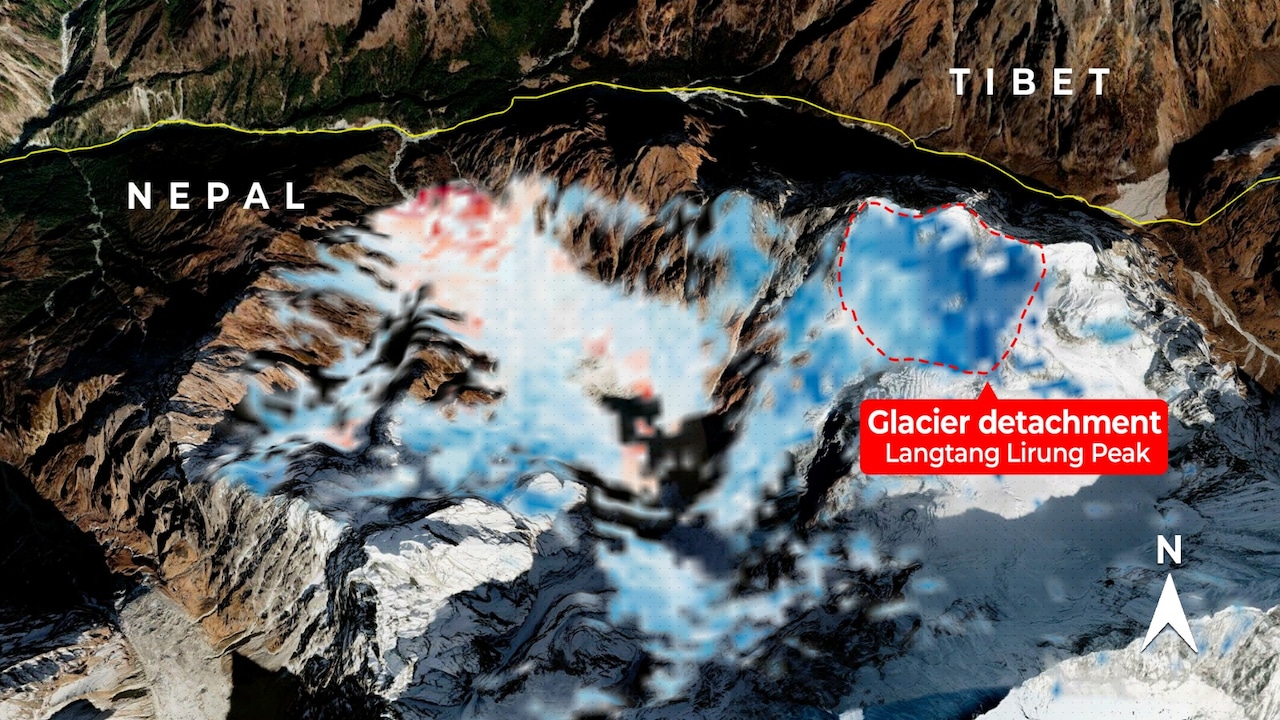
The failure of flood warning systems in Nepal following a glacier collapse has reignited conversations among geospatial experts. Professionals are now discussing whether integrating satellite observations could bolster early-warning capabilities.
What Happened?
Flood warning systems in Nepal failed to prevent or adequately warn against a recent glacier collapse event. The apparent movement of the glacier prior to its collapse has prompted the geospatial community to evaluate current monitoring methods.
Why It Matters
Traditional flood warning mechanisms in vulnerable regions like Nepal face critical vulnerabilities during sudden glacial disasters. Improving these systems with advanced technology is vital for preventing loss of life and property downstream.
Key Facts
- Flood warning systems failed during a glacier collapse event in Nepal.
- The glacier showed apparent movement before collapsing.
- The incident has prompted discussions within the geospatial community.
- Experts are examining the potential of integrating satellite observations into early-warning infrastructure.
Compiled from 1 outlet
Related Stories
NASA Updates Aerospace Career Challenge for U.S. Community College Students
NASA has restructured its student engagement program to connect community college learners with potential aerospace careers. The updated NASA Community College Aerospace Scholars initiative allows students to explore agency missions and interact with professionals.
Hubble Space Telescope Detects Ten-Sided Atmospheric Wave Around Saturn's South Pole
NASA's Hubble Space Telescope has observed a massive atmospheric phenomenon encircling Saturn's south pole. The newly tracked structure features a distinct ten-sided, or decagon, shape that is currently evolving.

Scientists Overcome Century-Old Barrier in Heat-to-Electricity Conversion
Researchers have successfully bypassed a century-old physical limitation regarding how heat is converted into electricity. This breakthrough challenges long-held scientific constraints in energy harvesting and thermodynamics. The achievement marks a significant step forward in developing more efficient power generation technologies.
CERN Shifts Focus to Dark Matter Following Higgs Boson Discovery
Following the historic discovery of the Higgs boson, the organization operating the world's largest particle accelerator is turning its attention to a new frontier. Researchers are preparing to investigate dark matter, an invisible substance comprising a substantial portion of the universe's mass. Despite its abundance, dark matter has never been directly detected by scientists.