US Air Force Acknowledges Space Weapon Deployment Amid White House Silence

Quick Brief
The US Air Force has acknowledged the deployment of weapons in space, prompting confusion among experts regarding the capabilities of the current administration's cosmic arsenal. Meanwhile, the messaging coming out of the White House regarding the deployment remains notably vague.
What Happened?
The US Air Force admitted to deploying weapons in space, a revelation that has left experts baffled regarding the exact nature and purpose of the armaments contained in the cosmic arsenal.
Why It Matters
The acknowledgement highlights a significant development in space militarization while the administration's lack of transparent explanation leaves observers and experts guessing about national space defense policy.
Key Facts
- The US Air Force admitted to deploying weapons in space.
- Experts have been left confused regarding the specifics of the administration's cosmic arsenal.
- Messaging from the White House regarding the deployment has been described as vague.
Compiled from 1 outlet
Related Stories

Supreme Court Denies Panel Extension, Sets November 30 Deadline for Aravalli Report
India's Supreme Court has declined to grant an extension to the high-powered committee investigating the Aravalli hills and range. The court has instead instituted a firm deadline of November 30 for the panel to submit its final report. The committee is responsible for formulating a consistent definition for the ecologically sensitive region and advising on mining regulation.
New Study Reveals Tyrannosaurus Rex Had Mammal-Like Body Temperature
A recent scientific study has determined the body temperature of the Tyrannosaurus rex for the first time by analyzing its teeth. Researchers found that the apex predator possessed a warm-blooded metabolism, with a body temperature of roughly 97 degrees Fahrenheit, comparable to that of humans and modern mammals.
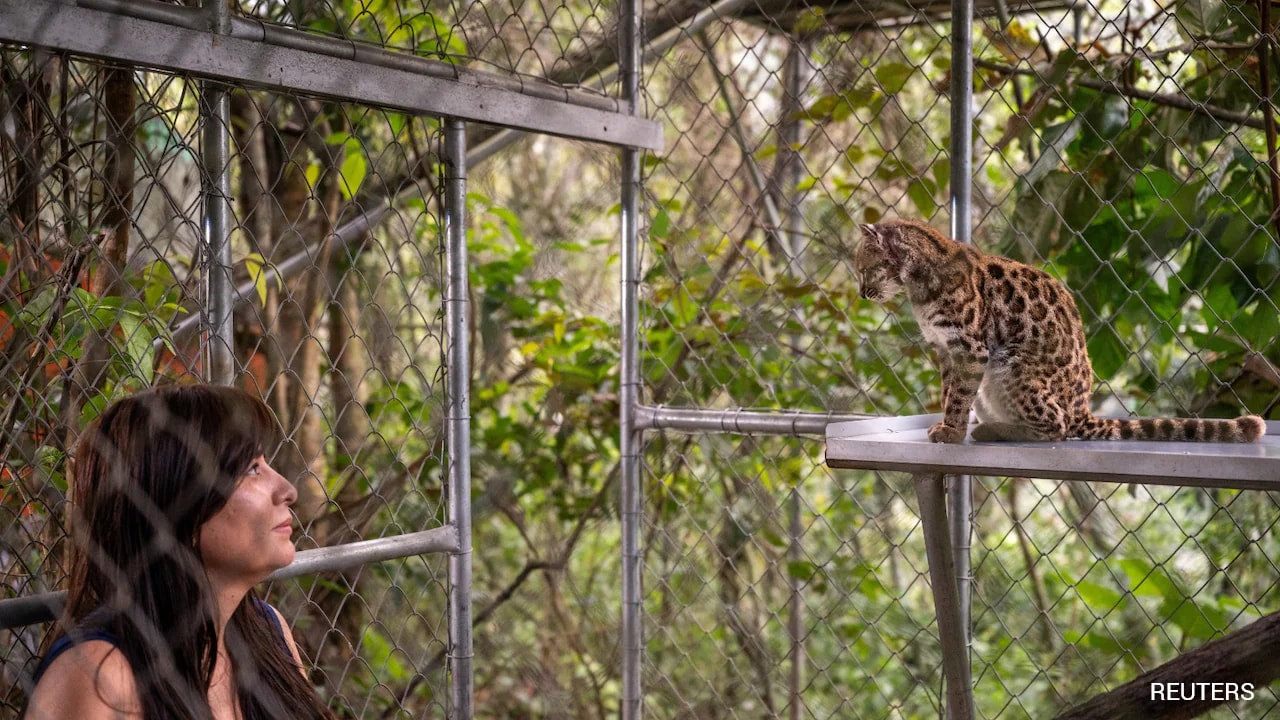
Scientists Identify First New Wild Cat Species in Over a Century
Scientific experts have officially identified and described a brand new living wild cat species. This breakthrough marks the first time in more than one hundred years that a new wild cat species has been named.
Rare Genetic Mutation Identified That Significantly Increases Lung Cancer Risk in Nonsmokers
Researchers have discovered a rare genetic mutation that substantially elevates the likelihood of lung cancer in people who have never smoked. The rare variant helps explain why some lifetime nonsmokers develop the disease.