One-Third of Uttarakhand's 219 Hanging Glaciers Found Unstable Amid Rapid Warming
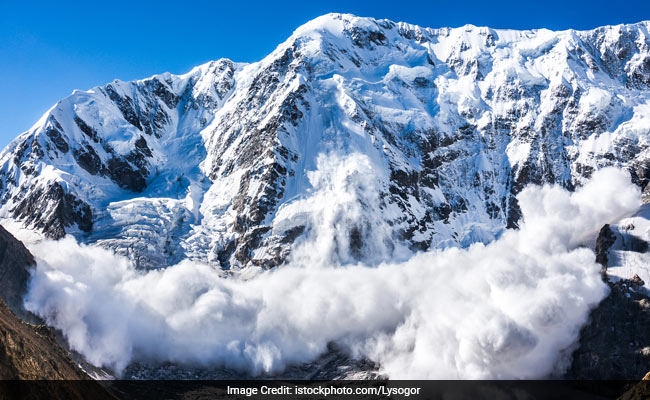
Quick Brief
A recent study has identified 219 hanging glaciers situated across Uttarakhand, noting that roughly one-third of them are currently unstable. These formations reside on steep slopes rather than valley floors, increasing their natural vulnerability. Researchers point out that the Himalayan region is experiencing warming rates that outpace the global average, further threatening glacier stability.
What Happened?
Research focused on the Himalayan region of Uttarakhand has documented 219 hanging glaciers. The evaluation revealed that approximately one-third of these steep-slope glaciers are unstable due to accelerated regional warming exceeding global averages.
Why It Matters
Hanging glaciers are inherently precarious because they rest on steep slopes rather than traditional valley floors. With rapid regional warming driving increased instability across a significant portion of Uttarakhand's glacial formations, environmental and safety risks in the area are heightened.
Key Facts
- Uttarakhand is home to 219 hanging glaciers.
- Approximately one-third of these hanging glaciers are unstable.
- Hanging glaciers are positioned on steep slopes rather than valley floors.
- The Himalayan region is warming at a rate faster than the global average.
Compiled from 1 outlet
Related Stories

The Fin-Tastic Fish Puzzle Solution Revealed
Readers are presented with the solution to the latest underwater puzzle challenge. The brainteaser involves tracking a fish's swimming path inside a specific-sized tank.

Shift in Airborne Pollutants Drives Unexpected Recovery of Rosy Footman Moths
While airborne pollutants have generally driven a massive decline in overall insect populations, the rosy footman moth has experienced an unexpected recovery and geographical expansion. This unusual trend is linked to a shift in major airborne pollutants since the 1990s, rather than the elimination of sulphur dioxide alone. The changing chemical landscape has benefited lichens and algae, providing an abundant food source for the moth's caterpillars.

Students Showcase Innovations at CREGU Young Scientist and Technology Expo in Cuddalore
Students gathered in Cuddalore to present their scientific and technological projects at the CREGU Young Scientist and Technology Expo. The event provided a platform for young minds to display their innovations and technical creativity.
European Scientists Recreate Microscopic 'Big Bang' Using Oxygen Collisions
European researchers at CERN have successfully simulated the conditions of the early universe by colliding oxygen nuclei. This experiment produced a microscopic droplet of quark-gluon matter, marking the smallest collision system yet to reveal this high-temperature state. The findings provide insights into how matter behaved fractions of a second after the Big Bang.