Why Britain's Spiders Seem to Multiply Every Autumn
Quick Brief
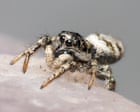
As summer draws to a close, residents across Britain notice an apparent surge in spider activity indoors and outdoors. Experts explain that these eight-legged creatures are not actually more numerous now than in spring; they have simply grown to their maximum size.
What Happened?
The arrival of autumn brings a surge of visible spider webs and larger arachnids across lawns, carpets, and doorways throughout Britain. According to Dave Clarke, an ectotherm specialist at the Zoological Society of London, the population is actually at its highest in the spring when hundreds of tiny spiders hatch from egg sacs. However, because they grow significantly larger over the course of the summer, both the spiders and their corresponding webs become much more noticeable to humans by autumn.
Why It Matters
Understanding seasonal spider visibility helps alleviate common misconceptions about sudden pest invasions, highlighting the natural life cycles of local wildlife that coexist alongside human households during the autumn months.
Key Facts
- Spiders are actually most numerous in the spring when they hatch from egg sacs.
- Hundreds of baby spiders typically emerge from a single egg sac.
- By autumn, spiders reach their maximum size, making them and their webs much more obvious.
- Common species encountered during this season include cardinal spiders and false wolves.
Compiled from 1 outlet
Related Stories
SpaceX Secures Expanded $5.92 Billion Deal With NASA for Additional Crewed Flights
SpaceX has landed an expanded $5.92 billion contract agreement with NASA. The deal involves flying more astronaut crews to the International Space Station. Financial details and flight scope are governed by the newly updated partnership.
Diplodocus Fossils Discovered in Spain Challenge North American Exclusivity
Fossils of the sauropod dinosaur Diplodocus have been identified in Spain. Previously, scientists believed these prehistoric creatures existed exclusively in North America. The unexpected discovery broadens the known geographic range of the genus.
NASA's Nancy Grace Roman Space Telescope Captures First Light and Doubles Potential Lifespan
NASA's Nancy Grace Roman Space Telescope has achieved a significant milestone by glimpsing its first cosmic starlight before reaching its final destination. Alongside this initial imagery, NASA activated the observatory's primary instrument and checked out the coronagraph. Agency officials also announced that the $4 billion mission's expected operational lifespan could more than double to 22 years.
XRISM Observatory Captures Pulsar Feeding on Companion's Stellar Wind
Astronomers using data from the Japan-led XRISM observatory have directly witnessed a compact companion capturing the stellar wind of a giant star. This cosmic feeding mechanism acts as the power source for intense X-ray flares. The finding contributes to NASA's broader exploration of the extreme universe.