US and Iran Exchange Fire in Strait of Hormuz as Trump Warns of Further Action
Quick Brief
The United States and Iran have exchanged fire for the first time in a month after American forces targeted Iranian rocket launchers on an island in the Strait of Hormuz. In response, Iran launched attacks directed at US military bases located in Jordan and the United Arab Emirates. Following the flare-up, US President Donald Trump warned that Washington would take additional action.
What Happened?
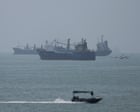
American forces conducted missile and drone strikes against Iranian rocket launchers situated on an island in the Strait of Hormuz after observing what Washington described as plans by Iran to deploy new mines in the waterway. In retaliation, Iran targeted US military installations in Jordan and the United Arab Emirates. US President Donald Trump issued a Monday warning threatening further action. The military actions are part of a broader American effort to loosen Tehran's control over shipping lanes through the strait, which prior to the conflict handled one-fifth of the world's seaborne energy supply.
Why It Matters
The Strait of Hormuz is a critical global shipping corridor that historically accounted for twenty percent of the world's seaborne energy supply before the war. The renewed exchange of fire between the US and Iran threatens regional stability and disrupts vital maritime trade routes.
Key Facts
- The US and Iran exchanged fire for the first time in a month.
- American missiles and drones targeted Iranian rocket launchers on an island in the Strait of Hormuz.
- Iran responded by targeting US military bases in Jordan and the United Arab Emirates.
- Washington stated the initial action was taken after observing plans by Iran to deploy fresh mines in the strait.
- US President Donald Trump threatened further action on Monday.
- The Strait of Hormuz accounted for a fifth of global seaborne energy supply before the war.
Compiled from 2 outlets
Related Stories

Nepal Rescuers Use Explosives to Reach Trapped Hydropower Workers
Emergency responders in Nepal are utilizing explosives to break through hillsides in an effort to reach hydropower workers trapped by severe weather. Meanwhile, the death toll from the ongoing flooding disaster has risen to 939 victims.

Families Maintain Hope Amid Search for Missing Loved Ones in Nepal Floods
Family members of individuals still unaccounted for following fatal floods in Nepal are refusing to give up hope for their survival. Search efforts continue as relatives look for their missing loved ones amidst the aftermath of the disaster.

India Rejects Hague Court's Indus Waters Treaty Ruling, Citing Lack of Jurisdiction
The Indian Ministry of External Affairs has rejected a recent ruling by the Hague Court of Arbitration concerning the Indus Waters Treaty. New Delhi stated that it has never recognized the legal existence of what it termed an illegally-constituted tribunal. Consequently, India maintains that the court lacks jurisdiction over the matter.

India Dismisses Hague Court Ruling Regarding Indus Waters Agreement with Pakistan
New Delhi has formally rejected an order from the Permanent Court of Arbitration instructing it to restore the Indus Waters Treaty with Pakistan. Indian officials argued that the tribunal possesses no jurisdiction over the nation's sovereign decisions and noted that the country has never participated in proceedings before the body.